

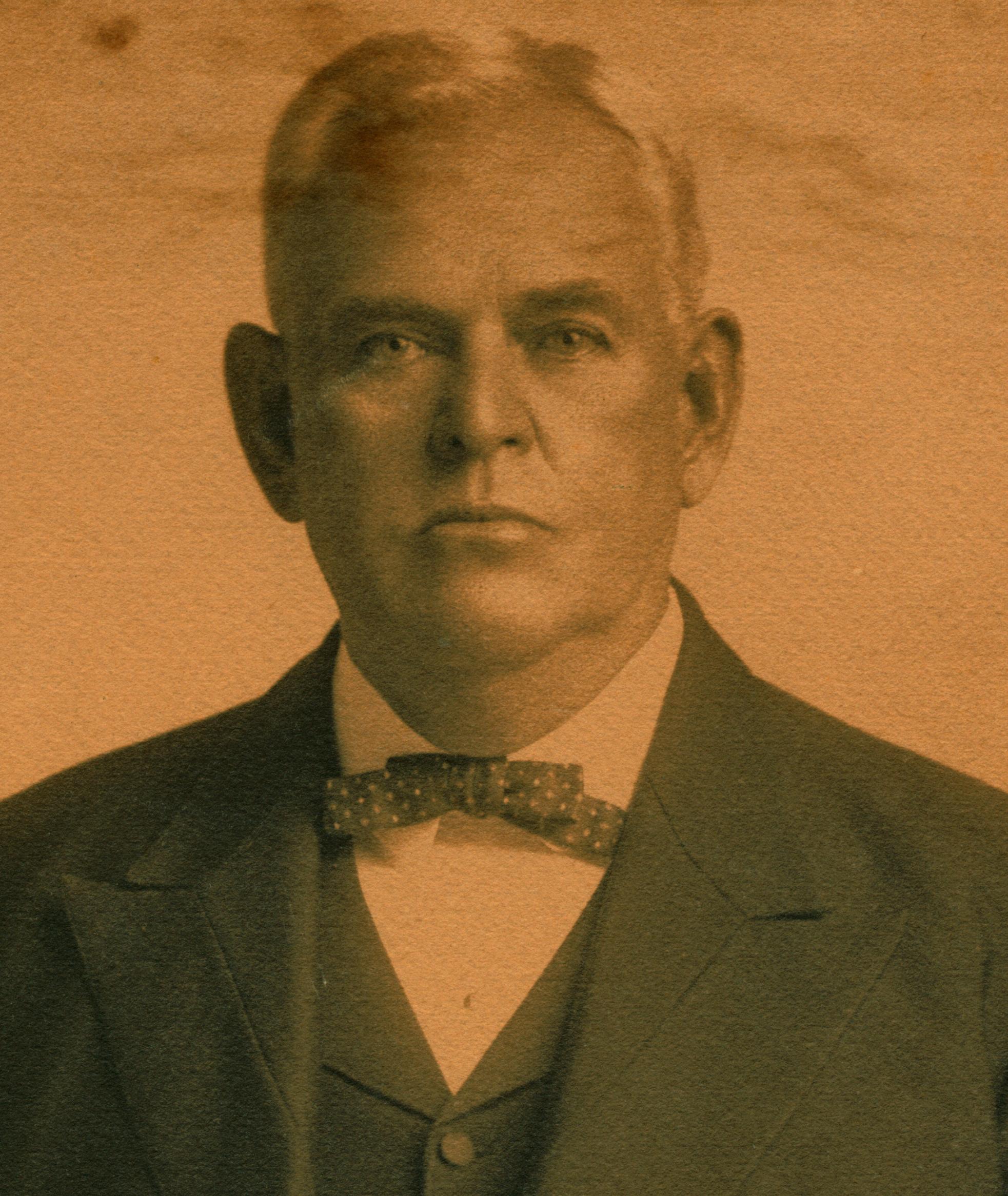
George Washington Hinshaw was a merchant and banker who served on the Board of Directors of the State Normal and Industrial College (Later the University of North Carolina at Greensboro) from 1910 until his death in 1918. The Hinshaw Residence Hall,, which opened in 1922, was named in his honor. Hinshaw was born in 1847 in Chatham County, North Carolina. His mother was a Quaker preacher. During the last year of the Civil War, at age 17, Hinshaw enlisted in the Confederate Army. He was wounded and was hospitalized in a boxcar infected with measles, which he contracted, and which left him with seriously impaired eyesight for the rest of his life. After the war he made his home in Winston, North Carolina and began work as a clerk in a general store. At some point in his twenties, he began to go by, and was thereafter commonly called, the name “Colonel Hinshaw,” although he had not been a colonel or other officer during his service in the Civil War. Throughout the latter half of the 19th century, Hinshaw would become a successful merchant in Winston, soon owning the store where he began working. His store was notable for employing the first woman clerk in the city. Hinshaw was one of the founders of the Winston Chamber of Commerce, which he would later serve as president. Hinshaw, because of his eyesight, had never been able to achieve the level of education he desired, and perhaps this in part is why he became an advocate for public education. He was a co-author of the bill to provide the first graded schools in North Carolina. In 1880 he was elected commissioner of Winston’s schools. Soon after the State Normal and Industrial School (later UNCG) was founded in 1891-2, Hinshaw became a large and frequent donor to the school.